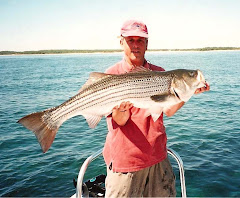
One of the feistiest early season light tackle and fly game fish is the American Shad. While Long Island sees mostly visits of Hickory Shad, the Americans are well within striking distance of Long Island anglers who might like a late March or early April break from the winter hiatus. The Delaware and Connecticut Rivers both still enjoy returns of American Shad. Most of my fishing for shad has been in the lower portion of the Delaware River. That shad run is still a much-heralded fish happening in all the towns along the Delaware. The run has been celebrated for as long as this great nation of ours has been united republic. Once living close to the town of Lambertville, New Jersey I had numerous opportunities to witness the last remaining seine netting operation of shad on the river. The Fred Lewis family still nets shad as it has done since 1888 from an island bearing the family name. From those nettings, the well-known Lambertville Shad Festival is kept stocked with an inventory of fresh fish for visitors to sample, cooked in a variety of tasty ways. The seining process is quite a unique sight and even more of a tourist attraction. Seeing all those shad is enough to get any fisherman excited.
I have been fishing for shad on a fly rod and light tackle for about twenty-six years now. My indoctrination to the species came during a period when I lived along the lower reaches of the Delaware River in Hunterdon County, NJ.
Big roe American Shad can reach weights of eight or nine pounds. The buck shad are about half that size. They will be active in the Delaware River from late March in the lower portions of the river until late June in the upper reaches above the Water Gap where they spawn.. Shad prefer cooler water temperatures and will become active with water around the mid-fifty degree mark and into the low sixty-degree range. While they can still be found during summer months, the spring is by far the peak time.
Since catching those first shad I make it a point to target them in the early part of each season and I always have a wonderful time with a suitably sized fly rod or light spinning outfit. Most any small to moderately sized flies work well, and truth be told they offer much more sport than early-season stocked trout. They strike lures aggressively, and go airborne. When the choice is planted trout or fresh sea run shad the shad will always win out in my book. Shad belong to the same family of fish as herring and the same family as tarpon. While diminutive in size they have inherited many of the same sporting qualities and attributes of their very large cousins. They are a fun fish. And they will offer a ‘quantity’ experience as well.
When fly fishing for shad, the lighter the outfit the better. Any good trout rod in 6 or 7 weight is ideal; no need to go much larger than an 8 weight. Even if school-sized striped bass are in the neighborhood, the lighter rods will offer much more enjoyment. Since shad feed on a wide array of food sources from plankton to small crustacean and baitfish, a number of different flies will work quite well. Small versions of Deceivers and Clouser Minnows are ideal but I have found that tiny dart-sized flies used for Sockeye salmon work very well in all sorts of wild colors, chartreuse, orange, gold, yellow and red being some personal favorites. As far as lines go, preferences are toward high-density sink tip lines. A short, 6-foot leader is all that is required since shad are far from being line shy. Shad can also be fished effectively on light spinning gear with traditional darts, spinners and small tins.
Shad populations fluctuate so check on local state regulations before pursuing this spunky game fish.
Saturday, March 6, 2010
Saturday, January 23, 2010
Winter Happenings
Brrrrr! What’s up with global warming? It feels to me like we are heading into another Ice Age! Time to get those tip-ups ready. Actually, as my fly-fishing thoughts turned to the southeast I contacted a number of my guide friends in Georgia and Florida to check out the ‘warmer’ fishing scene but they have been experiencing a bit of an unusual winter freeze of their own. While they may not be as good as we are at driving in the snow, they are still catching fish. In Florida, despite 20-degree temperatures and snow flurries, redfish are being caught with a high degree of regularity. They are a hardy fish, within reasonable temperature limits, and the months of January and February can be especially good months for the traveling fly and light tackle angler to target reds. Stay tuned for future issues of The Fisherman where we will present some terrific winter destinations for redfish as well as other species.
There is a line from the classic Sinatra song, “My Way”, that is a most appropriate lament at his time of year for Long Island’s fishermen. It goes something like, “…and now the end is near and so I face the final curtain…”
While not nearly as dramatic an ending as implied in that song, the distressing reality is that the curtain has long fallen on the 2009-fishing season. But fear not for we have budding hopes of a new beginning that is just around the corner. Perhaps we can develop a method of fly-fishing for cod! Fortunately, spring is but a few months away and with each lengthening day comes the anticipation of even better fishing prospects.
Luckily there is also a “fishing season” of sorts that can occupy our time while waiting for the warmer weather to herald the return of the fish. It is the season of fishing shows. During the winter months a number of excellent outdoor shows can keep one’s thoughts on fishing and help hone angling skills. The local and tri-state area hosts a number of excellent venues.
Here are a few of the winter offerings that local fly and light anglers can take advantage of. All are informative, entertaining and will go a long way toward reducing the effects of cabin fever. Mark your calendar with one or all of the following and take along one of your fishing buddies. You’ll have a great time.
A perennial favorite show for area fly fishermen is the Somerset NJ Fly Fishing Show. The show has once again returned to the Garden State Exhibition Center. It draws fishermen from the tri-state area as well as Pennsylvania and many mid-Atlantic and northeast states. It is a well-attended and popular show for both the beginner and advanced fly fisherman, and fly tier. It is also can be of interest to light tackle and traveling anglers. The big draw of this event tends to be the presence of many well-known names of the sport, in addition to a wide array of retailers, tackle manufacturers and destination outfitters. There are numerous casting and fly tying demonstrations and well as a comprehensive agenda of guest lecturers. The show has a reputation for being a great place to book a trip for the coming season; outfitters are on site at the show from Long Island to Alaska. The show runs from January 22 through January 24.
One show that is close to home is the annual New York Sportsmen’s Outdoor Expo at the Nassau Coliseum. The exhibitors at this show typically represent an eclectic array of interesting products and services for the outdoor enthusiast. As well, there will be a wealth of local information to be had from a series of daily educational seminars presented by some of Long Island’s best fishermen. The show runs January 29-Jan 31.
An interesting addition to the show slate is the Long Island Recreational Fishing
Expo at Queens College in the Fitzgerald Gymnasium. The show runs form February 5 thru February 7. The planned schedule includes free lectures and clinics.
Another good event in February is the New York Sportfishing Federation Show that has a schedule loaded with seminars by local experts. That show runs
From February 12 through Feb 14.
An annual favorite of area sportsmen is the Eastern Fishing & Outdoor Exposition. This show is one of the area’s oldest and largest sportsmen’s shows. It is held each winter at the Rockland County Community College Field House in Suffern, New York…a relatively short drive from Long Island. This show is a veritable treasure trove of outdoor “stuff”. There is aisle upon aisle of new products, outfitters, tackle dealers and numerous other equipment manufacturers. Various demonstrations and lectures round out the offerings and can enhance any angler’s skills. The show runs from March 4 through7.
The Saltwater Fishing Exposition is a terrific show for saltwater fishing enthusiasts. With over 300 planned exhibitors, there should be something of interest for every fisherman who drops a line into the briny deep. The show is expected to cater to all forms of saltwater angling, including offshore, light tackle and big-game fishing. Retailers, captains and trip planning services will be available to show attendees. Boats, motors and kayaks will also be on display, as will all other types of gear associated with the sport of saltwater fishing. Rounding out the offerings will be a series of expert seminars that will run throughout the course of the show. The show runs from March 19 through 21 at the Garden State Exhibit Center in Somerset New Jersey.
For those anglers shopping around for a new boat, the Suffolk County Boat and Sportfishing show will run from February 26 to 28 at the Suffolk Community College Sports and Exhibition Complex. A number of Long Island’s boat dealers will on hand with some of the current market favorites. This is also the show that the Fisherman magazine and the Long Island Outdoor Communicators Network award the prizes for the 2009 Youth Essay Writing Contest on February 27. This should shape up as a very nice event.
Many of the local Long Island tackle shops also host an interesting agenda of informative sessions during the winter months. Two of the more popular locations on the Island for in-shop seminars and lectures are the Orvis store in Greenvale and Campsite Sports Shops in Huntington Station. You can check directly with these shops for the dates of their winter programs. Local area clubs also offer interesting winter programs. Check out Eastern Flyrodders of Long Island, Salty Flyrodders of New York and the Long island Flyrodders
For further details and directions, simply “Google” the shows or clubs you are interested in. Enjoy!
There is a line from the classic Sinatra song, “My Way”, that is a most appropriate lament at his time of year for Long Island’s fishermen. It goes something like, “…and now the end is near and so I face the final curtain…”
While not nearly as dramatic an ending as implied in that song, the distressing reality is that the curtain has long fallen on the 2009-fishing season. But fear not for we have budding hopes of a new beginning that is just around the corner. Perhaps we can develop a method of fly-fishing for cod! Fortunately, spring is but a few months away and with each lengthening day comes the anticipation of even better fishing prospects.
Luckily there is also a “fishing season” of sorts that can occupy our time while waiting for the warmer weather to herald the return of the fish. It is the season of fishing shows. During the winter months a number of excellent outdoor shows can keep one’s thoughts on fishing and help hone angling skills. The local and tri-state area hosts a number of excellent venues.
Here are a few of the winter offerings that local fly and light anglers can take advantage of. All are informative, entertaining and will go a long way toward reducing the effects of cabin fever. Mark your calendar with one or all of the following and take along one of your fishing buddies. You’ll have a great time.
A perennial favorite show for area fly fishermen is the Somerset NJ Fly Fishing Show. The show has once again returned to the Garden State Exhibition Center. It draws fishermen from the tri-state area as well as Pennsylvania and many mid-Atlantic and northeast states. It is a well-attended and popular show for both the beginner and advanced fly fisherman, and fly tier. It is also can be of interest to light tackle and traveling anglers. The big draw of this event tends to be the presence of many well-known names of the sport, in addition to a wide array of retailers, tackle manufacturers and destination outfitters. There are numerous casting and fly tying demonstrations and well as a comprehensive agenda of guest lecturers. The show has a reputation for being a great place to book a trip for the coming season; outfitters are on site at the show from Long Island to Alaska. The show runs from January 22 through January 24.
One show that is close to home is the annual New York Sportsmen’s Outdoor Expo at the Nassau Coliseum. The exhibitors at this show typically represent an eclectic array of interesting products and services for the outdoor enthusiast. As well, there will be a wealth of local information to be had from a series of daily educational seminars presented by some of Long Island’s best fishermen. The show runs January 29-Jan 31.
An interesting addition to the show slate is the Long Island Recreational Fishing
Expo at Queens College in the Fitzgerald Gymnasium. The show runs form February 5 thru February 7. The planned schedule includes free lectures and clinics.
Another good event in February is the New York Sportfishing Federation Show that has a schedule loaded with seminars by local experts. That show runs
From February 12 through Feb 14.
An annual favorite of area sportsmen is the Eastern Fishing & Outdoor Exposition. This show is one of the area’s oldest and largest sportsmen’s shows. It is held each winter at the Rockland County Community College Field House in Suffern, New York…a relatively short drive from Long Island. This show is a veritable treasure trove of outdoor “stuff”. There is aisle upon aisle of new products, outfitters, tackle dealers and numerous other equipment manufacturers. Various demonstrations and lectures round out the offerings and can enhance any angler’s skills. The show runs from March 4 through7.
The Saltwater Fishing Exposition is a terrific show for saltwater fishing enthusiasts. With over 300 planned exhibitors, there should be something of interest for every fisherman who drops a line into the briny deep. The show is expected to cater to all forms of saltwater angling, including offshore, light tackle and big-game fishing. Retailers, captains and trip planning services will be available to show attendees. Boats, motors and kayaks will also be on display, as will all other types of gear associated with the sport of saltwater fishing. Rounding out the offerings will be a series of expert seminars that will run throughout the course of the show. The show runs from March 19 through 21 at the Garden State Exhibit Center in Somerset New Jersey.
For those anglers shopping around for a new boat, the Suffolk County Boat and Sportfishing show will run from February 26 to 28 at the Suffolk Community College Sports and Exhibition Complex. A number of Long Island’s boat dealers will on hand with some of the current market favorites. This is also the show that the Fisherman magazine and the Long Island Outdoor Communicators Network award the prizes for the 2009 Youth Essay Writing Contest on February 27. This should shape up as a very nice event.
Many of the local Long Island tackle shops also host an interesting agenda of informative sessions during the winter months. Two of the more popular locations on the Island for in-shop seminars and lectures are the Orvis store in Greenvale and Campsite Sports Shops in Huntington Station. You can check directly with these shops for the dates of their winter programs. Local area clubs also offer interesting winter programs. Check out Eastern Flyrodders of Long Island, Salty Flyrodders of New York and the Long island Flyrodders
For further details and directions, simply “Google” the shows or clubs you are interested in. Enjoy!

Sunday, November 8, 2009
Fly Tyer Profile: Bruce Marino BMAR Flies

I first met Bruce Marino a number of years back at the Somerset New Jersey Fly Fishing Show. Bruce was one of the show’s featured fly tyers. I was at first struck by both the artfulness and originality of his signature BMAR Wounded Baitfish flies. Equally impressive were throngs of onlookers watching to see how he tied his creations. Since that first meeting I have come to know that the Wounded Baitfish series is a very effective collection of flies for an ever-expanding range of game fish species. These flies have garnered international acclaim and are widely used by fly anglers and guides alike.
Bruce has been at the game of fly fishing and fly tying for over thirty-five years and has traveled to many destinations to fish for both freshwater and saltwater species. Along the path of his travels some of Bruce’s flies have become staples in the arsenals of the local area guides –many consider the Wounded Baitfish as a “go-to” pattern. A number of places have adopted Bruce’s flies including Cooper's Minipi Camps in Labrador where they employ the BMAR Norway Rat, Hex and Stonefly patterns. Guides at Crocodile Bay Lodge in Costa Rica use several of the BMAR Wounded Baitfish patterns as well, where they are used to catch both offshore and inshore species.
Bruce is also an accomplished guide on the crown jewel of Connecticut, the Farmington River, and as a shore guide along the Connecticut coastline. He shares his knowledge and expertise as a writer and in the capacity of fly tying editor for Fly Fishing New England and Fly Fishing the Mid Atlantic States magazines. Bruce is also a March Brown travel fly rods endorsed pro. Among some of the of the projects that he has recently completed is one where he ties flies on circle fly hooks for a study being conducted by Left Kreh along with many working captains in the Northeast. In the past, Bruce was on the research and development team for D.H. Thompson Cobra Vise and he is one of the lead designers for Pacific Fly Group; they have mass-produced many of Bruce’s innovative patterns that are sold worldwide. Bruce will tell you that guiding on the crown jewel of Connecticut, the Farmington River and shore guiding the coastline of Connecticut are now his passions. He is also currently promoting his DVD, "Fly Fishing for Mako Sharks" and completing a second DVD on "Fly Fishing the Farmington River". I was so impressed initially with the BMAR WoundedBaitfish that I included the entire series in my recently fly pattern book, Saltwater Flies of the Northeast. If you would like more information about Bruce’s flies or his guiding operation you can contact him at BMARflies@aol.com
Bruce has been at the game of fly fishing and fly tying for over thirty-five years and has traveled to many destinations to fish for both freshwater and saltwater species. Along the path of his travels some of Bruce’s flies have become staples in the arsenals of the local area guides –many consider the Wounded Baitfish as a “go-to” pattern. A number of places have adopted Bruce’s flies including Cooper's Minipi Camps in Labrador where they employ the BMAR Norway Rat, Hex and Stonefly patterns. Guides at Crocodile Bay Lodge in Costa Rica use several of the BMAR Wounded Baitfish patterns as well, where they are used to catch both offshore and inshore species.
Bruce is also an accomplished guide on the crown jewel of Connecticut, the Farmington River, and as a shore guide along the Connecticut coastline. He shares his knowledge and expertise as a writer and in the capacity of fly tying editor for Fly Fishing New England and Fly Fishing the Mid Atlantic States magazines. Bruce is also a March Brown travel fly rods endorsed pro. Among some of the of the projects that he has recently completed is one where he ties flies on circle fly hooks for a study being conducted by Left Kreh along with many working captains in the Northeast. In the past, Bruce was on the research and development team for D.H. Thompson Cobra Vise and he is one of the lead designers for Pacific Fly Group; they have mass-produced many of Bruce’s innovative patterns that are sold worldwide. Bruce will tell you that guiding on the crown jewel of Connecticut, the Farmington River and shore guiding the coastline of Connecticut are now his passions. He is also currently promoting his DVD, "Fly Fishing for Mako Sharks" and completing a second DVD on "Fly Fishing the Farmington River". I was so impressed initially with the BMAR WoundedBaitfish that I included the entire series in my recently fly pattern book, Saltwater Flies of the Northeast. If you would like more information about Bruce’s flies or his guiding operation you can contact him at BMARflies@aol.com
Sunday, November 1, 2009
A Building Fall Run
We are pretty well into it right now. Fish of all sizes seem to be spread out evenly all around the Island to the delight of many fly and light tackle anglers. Even the north shore got a nice jolt of bass this past week cruising the wash along the beaches. It almost had the feel of a legitimate fall run. While the western reaches of the Sound have been pretty hot as of late, the central Sound area only just heated up a notch. The area from about Cedar Beach in Mt Sinai out to Shoreham was especially productive with schoolies to mid-teens bass. I took a stroll on the beach slightly west of there Saturday morning and found some friendly fish. A group of local anglers was into them pretty solid. While most were small schoolies there were a few just-keeper bass in the mix. Fish in the wash, just a roll cast away, made for some nice in-tight fishing. The bass I saw taken were mostly caught on an assortment of plastics. Farther west the fishing remained consistent with the Triangle giving up a number of decent fish - both bass and blues – and Smithtown Bay is still showing signs of life. There were some solid reports as well coming in from the extreme western reaches of the Sound highlighting good bass, blue and ‘togs. The offshore shoals and deep water of the Sound also gave up some goods numbers of fish to diamond jigging. That is somewhat standard operating procedure for this time of year but the more that action builds the more the fish are staging for their retreat from the Sound, so the time to cash in is now. Albies are now more the exception than the rule with remaining pods taking up the rear of the run. Next stop, New Jersey and North Carolina. Moriches was hot this week as were many of the beaches to the east and west. The west-end had solid catches of fish and J-Bay is crankin’. Just a quick word on stripers. There is a report out on the state of the Chesapeake “young-of-the-year” striped bass. The report has been generated for that stock of fish for fifty years now, so there is a broad base of data that has validity. What it shows in summary for the period 2001 to 2008 is a dramatic reduction in the young-of-year stripers for the Chesapeake fishery, a resource that represents about 75% of the bass we see here on Long Island. As one renowned oceanographer put it, “the reduction is significant.” While we will report in more detail on those findings, as you fish the last innings of the 2009 season, try to keep only what you need and release the rest. I think some self-imposed limiting of the current take will go a long way toward ensuring the future health of the striped bass stock not only for us but also for our children. We don’t always need new laws to guide us to do the right thing. Thanks.
Tuesday, October 13, 2009
In like a lion, out like a lamb. While usually reserved for a description of spring’s arrival and departure, that phrase may have applicability to this year’s fishing season. The Long Island spring run was stellar but the formation of a complete fall run around the Island has been slow to start and even slower to form. It’s more of a jog than a run. Some believe we may have already seen the best of it but just like Mr. October’s home runs, the best may be saved for last. That said there have been some very consistent bright spots for fly and light tackle anglers. Despite tough conditions, a number of anglers are putting together a decent string of fall catches. The easy blitzes that have become a trademark of east-end fall action are few and far between so far this fall. One key to success is putting in the time and being persistent. Right now the skills at finding ones own fish are much more important than following the crowd.
The Sound has continued to deliver bass, blues and albies on both the New York and Connecticut sides. The CT shoreline has even maintained a continued run of Atlantic bonito around the Norwalk Islands, as have some areas to our east in Rhode Island, the Vineyard an the Cape. Some “bones” continue to be taken on the Long Island side of the Sound as well, but the vast majority of the pelagics in that body of water are albies. Leaving the fly rod in the truck and taking up a medium spinning outfit I bumped some small bass and blues along the beach and spied some albies a few casts out of range. Shinnecock continues as one of the strongest albie magnets this season, when the water is clean and the bait in strong concentrations. The fish are not only feeding on small rainbait but the masses of sand eels that are working their way down the south shore. Small butterfish are also on the menu.
Despite often challenging conditions, a number of anglers are putting together decent strings of fall catches. The easy blitzes that have become a trademark of east-end fall action are few and far between so far this fall. One key to success is putting in the time and being persistent. Right now the skills at finding ones own fish are much more important than following the crowd. I took my usual long fall walk and wade trips along the a few north shore beaches and was totally amazed at the lack of in-close surface activity but bass, blues and albies are still being caught. Much of the north shore action is sub-surface, with fish hanging near the bottom so it is better right now to fish proven structure-holding areas rather than just looking for typical topside fall activity. Some recent crab hatches have given a few top-water anglers a real treat. Moriches gave up some very nice bass this past week with a number of solid fish taken on Friday and Saturday along the beaches west of the inlet. Perennial fall favorite, Shinnecock, has also continued to produces as increasing numbers of fish begin to move west and south. Beach bass are also being caught at Moses and well into J-Bay. The western Sound is fishing much better than central areas. Orient has been on at times with large blues and mid-sized bass on top-water and bucktails. The Montauk rips have been seeing some bass into the 30s on bucktails and a few diligent fly casters have taken schoolie to teen-sized fish from the sand beaches west of the Point.
The Sound has continued to deliver bass, blues and albies on both the New York and Connecticut sides. The CT shoreline has even maintained a continued run of Atlantic bonito around the Norwalk Islands, as have some areas to our east in Rhode Island, the Vineyard an the Cape. Some “bones” continue to be taken on the Long Island side of the Sound as well, but the vast majority of the pelagics in that body of water are albies. Leaving the fly rod in the truck and taking up a medium spinning outfit I bumped some small bass and blues along the beach and spied some albies a few casts out of range. Shinnecock continues as one of the strongest albie magnets this season, when the water is clean and the bait in strong concentrations. The fish are not only feeding on small rainbait but the masses of sand eels that are working their way down the south shore. Small butterfish are also on the menu.
Despite often challenging conditions, a number of anglers are putting together decent strings of fall catches. The easy blitzes that have become a trademark of east-end fall action are few and far between so far this fall. One key to success is putting in the time and being persistent. Right now the skills at finding ones own fish are much more important than following the crowd. I took my usual long fall walk and wade trips along the a few north shore beaches and was totally amazed at the lack of in-close surface activity but bass, blues and albies are still being caught. Much of the north shore action is sub-surface, with fish hanging near the bottom so it is better right now to fish proven structure-holding areas rather than just looking for typical topside fall activity. Some recent crab hatches have given a few top-water anglers a real treat. Moriches gave up some very nice bass this past week with a number of solid fish taken on Friday and Saturday along the beaches west of the inlet. Perennial fall favorite, Shinnecock, has also continued to produces as increasing numbers of fish begin to move west and south. Beach bass are also being caught at Moses and well into J-Bay. The western Sound is fishing much better than central areas. Orient has been on at times with large blues and mid-sized bass on top-water and bucktails. The Montauk rips have been seeing some bass into the 30s on bucktails and a few diligent fly casters have taken schoolie to teen-sized fish from the sand beaches west of the Point.
Thursday, September 17, 2009
Hard Tails Are Back

They’re back! For those of you eagerly anticipating the arrival of false albacore, the long wait is over. While there have been some concentrations of fish around the Island for a few week, the albies seem to have engaged in an all out invasion this past week, on both shores of the Island and to the west and east. They are strong in Montauk, around Fishers, in the Sound and around Shinnecock. They are still active in the west end and J-Bay has a solid concentration of them. Some of the numbers of fish landed have been impressive. The “Alberts” are tending to run smaller than previous years, 6-8 pounds but they still are full of all the energy any light tackle or fly angler could ask for. I know two anglers whose catches last week would make an entire hard tail season for some. While the albies are gaining in strength, the bonito are the exception in local waters. There weren’t many reports of bones this past week. They still seem to be their strongest along the Rhode Island coastline. Big bluefish are still chomping they way through local bait. I hit upon some nice sized blues cruising right up along the edge of surf and beach. They had that early fall-run behavior about them and didn’t appreciate my flies intersecting their paths! My flies paid the price! In some quadrants of the Island bass are still responding well to flies and artificials and should only get better in the coming weeks. Montauk is just being Montauk and for those of you who throw flies, an entire season can be made out of the blitz days that are happening right now and will hopefully continue right through October.
Monday, September 7, 2009
Where Art Thou Atlantic Bonito

There is slightly better news to report on the “bones” front for this week. Some of the bonito and Spanish mackerel that were tight along the near-New Jersey beaches are reported to have moved into Jamaica Bay. While the formerly steady Rhode Island fish have been an on-again, off-again proposition, and with some good catches one day and spotty action the next, a few pods of “bones” have been encountered in the extreme eastern reaches of Long Island Sound, and even fewer pods more further west. A friend of mine who fishes under the radar managed two fish this week out in areas of the eastern Sound. Reports of bonito in the western reaches of the south shore have been slim to non-existent. It will be interesting to see if those N.J. and J-Bay fish move east along the coast or up into the Sound. There’s plenty of bait around so the fish have options. There have also been bonito and abundant skipjack offshore traveling with the larger tuna so it remains to be seen if those fish choose to move inshore or stay out in blue water. Some of you also asked if I might suggest a rationale for this year’s pattern of local bonito behavior. The short answer is that fish do what fish do, not what we always expect based on prior seasons. A lot of variables affect fish species’ movements: water temperature, weather and winds, availability of preferred bait, water quality, spawning instincts and the element of serendipity…and do they ultimately take a left turn or a right turn in their wanderings. Many of the “bones” in our area seem to be traveling with their other tuna cousins and are mixed in with bluefin, yellowfin, skippies and ablies, all of whom have found good water. You can also find bonito mixed in with bluefish, usually hanging on the fringes, picking off the easy meals. Bonito are also affected by another key element, as are other fish, birds, mammals and anything else that migrates…angle and available amount of sunlight and length of day. That latter element has triggered mass migrations for millennia and presents a bit of a modern day dilemma for local bonito anglers. My best year for bones in the 33 that I have been fishing for them involved a great September run that ran into the first three weeks of October. But there were early fish around that year in August as well. That year also witnessed incredibly large schools of exceptionally large spearing, and from my personal experience and observation that is a preferred baitfish – big bonito love them. But as the days of this season shorten and fish begin to instinctively sense the pending migration, the big question involves timing and whether or not they will still head east only to then head back west. I’ve caught bonito well into November so the game in the central parts of Long Island is still a wide-open one. While all that remains to be seen, my humble guess is that we will still see a reasonable semblance of a run for both bonito and albies in those areas.
Subscribe to:
Posts (Atom)